
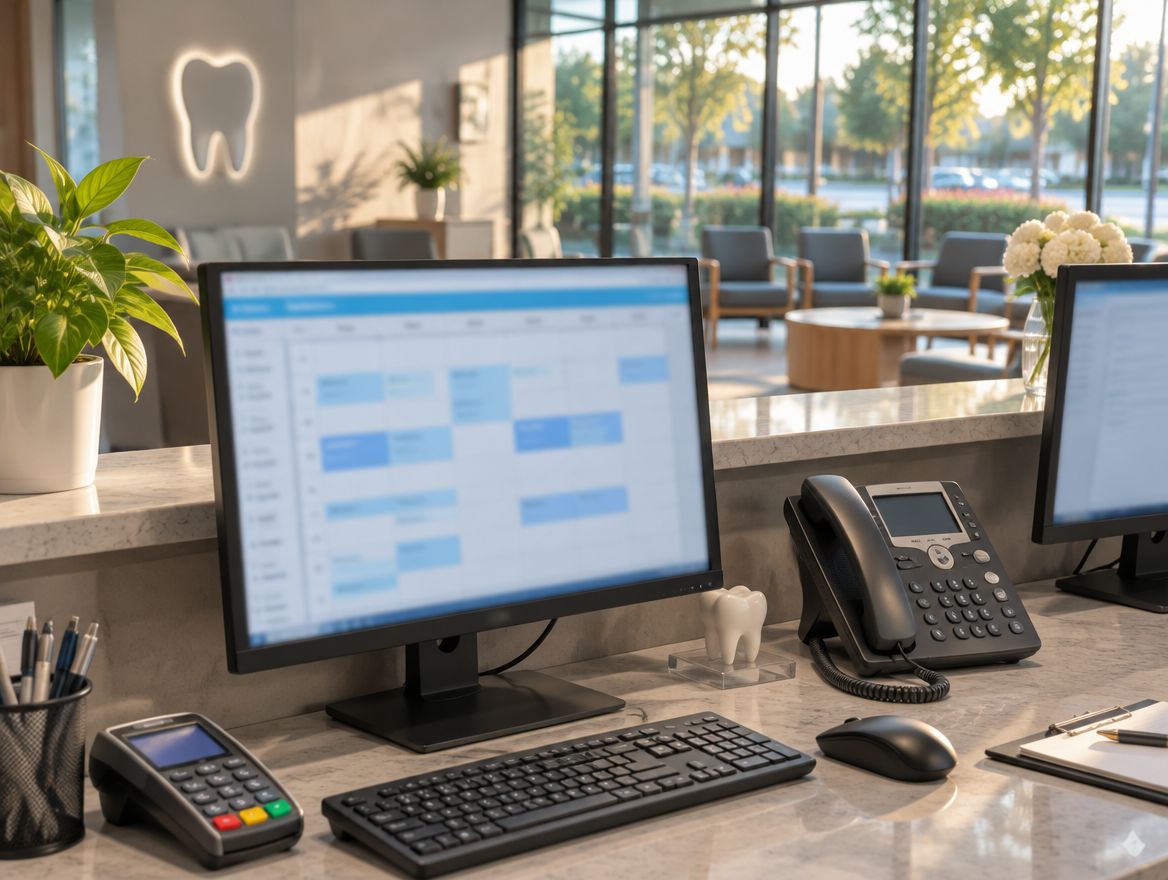
ClearMax Labs runs practiceuptime.com and builds the technology inside new and relocating dental offices in Boston. ClearMax technicians install the cabling, WiFi, phones' network, door access, cameras, displays, server and desk computers on site, all under one written project that ends on a set date. No monthly agreement is involved.
Last updated: November 2026
What ClearMax Labs puts in the building
- Network cabling, numbered per device and ending at one panel.
- Commercial WiFi on separate staff and guest networks.
- The phone network, with a way to dial out when the internet is down.
- Fob or card entry where a door protects something, and cameras with the microphones off.
- Displays: planned with the rest of the buildout.
- A dedicated server built to the practice software's requirement sheet, and computers configured per station.
Lines between the trades
The general contractor owns construction, ceilings and electrical service. The dental dealer owns chairs, sensors and imaging. The landlord owns shared shafts, the basement and work-hour rules. The internet carrier brings the circuit, ordered by the practice. The software publisher owns the program and its help desk; ClearMax Labs has no affiliation with Carestream Dental, Sensei or any other dental software maker. ClearMax technicians own every cable, controlled door, camera, access point, the server and the workstations. The practice owns the decisions and every account.
How a project runs
- A message through the contact page about the space and its dates.
- Questions back on what is missing, usually the dealer's list, the contractor's calendar and the building's rules.
- A written scope and quote prepared from those answers. Nothing is scheduled until the practice agrees. If more work is needed, it is brought to the practice's attention and the bid is updated.
- Work in step with construction.
- Testing of every run, door, camera and access point, one restore from backup, then the records go to the practice.
Why the handover record matters
It is the practice's map of cables, doors, cameras, networks, the server build and backup destinations. It also notes settings the law cares about. Massachusetts dental rule 234 CMR 5.14 accepts a dated written or electronic signature from the treating dentist or auxiliary, so each clinician's login is personal and recorded, never shared. And because Massachusetts General Laws chapter 272, section 99 treats secretly recording a conversation without prior authority from all parties as an interception, the record confirms that every camera's microphone is off.
This is not legal advice; how a rule applies to one practice is a question for its lawyer.